
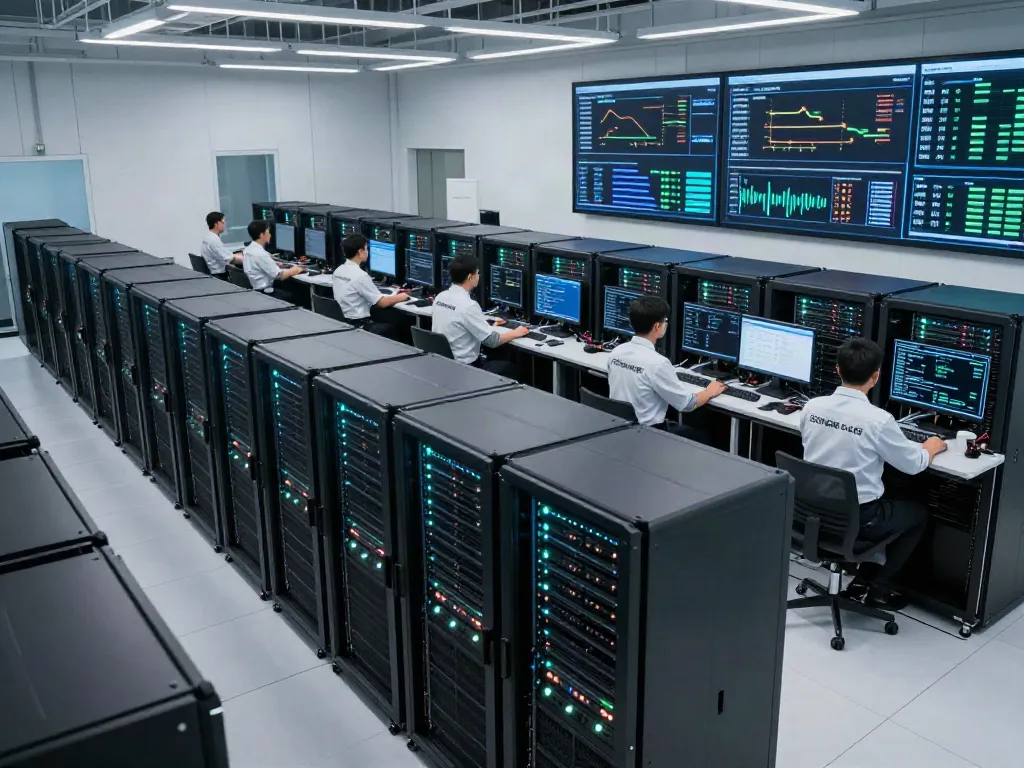
Understanding AI Data Centers
Artificial Intelligence (AI) is revolutionizing sectors across the globe, necessitating robust computing fundamental to its development and application. As AI technologies advance, the infrastructure that supports them evolves, giving rise to specialized facilities known as AI data center. These centers are purpose-built to handle the high computational demands of AI applications, featuring advanced hardware optimized for machine learning and deep learning tasks.
What is an AI Data Center?
An AI data center is a dedicated facility designed to support the processing needs of AI workloads. Unlike traditional data centers, which primarily process a variety of tasks, AI data centers are optimized for specific computational requirements associated with AI workloads. These include high-density GPU computing, massive parallel processing capabilities, and enhanced data storage solutions. As AI applications become more complex, the need for specialized environments to support their training, deployment, and operation becomes increasingly critical.
Key Components of AI Data Infrastructure
To effectively support AI applications, AI data centers incorporate several key components:
- Graphics Processing Units (GPUs): GPUs are at the heart of AI data centers, providing the necessary computational power for training models and processing large datasets.
- High-speed Networking: Fast, robust network infrastructure is essential for minimizing latency and maximizing data transfer speeds among computing resources.
- Advanced Cooling Solutions: Given the substantial heat generated by high-density computing, effective cooling mechanisms are necessary to maintain optimal operating conditions.
- Energy Efficiency Mechanisms: AI data centers often implement advanced power management systems to reduce energy consumption and operational costs.
Differences Between Traditional and AI Data Centers
AI data centers differ from traditional data centers in several ways. While traditional data centers might utilize a mix of CPUs for diverse workloads, AI data centers focus heavily on GPUs and high-density configurations tailored for intensive computational tasks. Furthermore, AI data centers prioritize energy efficiency and performance optimization, often employing state-of-the-art cooling technologies and power management systems that are not typically found in conventional setups.
The Role of Power in AI Data Centers
Power is a critical element in the functioning of AI data centers. Efficient power management can significantly influence not only operational costs but also the overall performance of AI applications. With the growing demand for AI capabilities, optimizing power consumption has become an essential focus for data center operators.
Why Efficient Power Management Matters
Effective power management helps minimize costs and environmental impact while maximizing performance. AI data centers are known for their high energy consumption due to the intensive processing requirements of AI tasks. Implementing energy-efficient technologies and practices can lead to significant savings, making it essential for data centers to invest in advanced power management systems.
Impact of Power Source on AI Performance
The source of power used by AI data centers plays a crucial role in overall performance and sustainability. Utilizing renewable energy sources can reduce operational costs and improve the carbon footprint of AI operations. As data centers move towards greener alternatives, they not only enhance their public perception but also align with global sustainability goals.
Cost Considerations in Power Allocation
Power costs can vary significantly based on location, energy contracts, and utility tariffs. AI data centers must carefully assess these factors when planning their infrastructures. By optimizing power allocation and considering innovative pricing models, operators can manage costs effectively while ensuring their AI workloads run smoothly.
Participation in the AI Token Economy
As the AI landscape evolves, new economic models are emerging that allow individuals and businesses to engage with AI infrastructure economically and sustainably. One such model is the AI Token Economy, wherein participants can earn rewards based on their contributions to AI infrastructure.
How to Join the AI Token Economy
Joining the AI Token Economy requires selecting a suitable power plan within an established platform like 51 AIpower. Participants can choose plans based on their power needs and contribution goals, ensuring they have access to the necessary resources while engaging in AI-powered operations.
Contribution Tracking and Rewards System
Effective tracking of contributions is essential to fairly reward participants. Platforms typically monitor energy usage and the performance of AI workloads associated with a participant’s plan. By accurately recording these metrics, reward calculations can reflect actual contributions, promoting transparency and accountability within the AI Token Economy.
Benefits of Participating in AI Infrastructure
Participation in the AI Token Economy offers several advantages, including:
- Revenue Potential: Participants can earn rewards based on the operational performance of AI services they support.
- Resource Access: Engage with cutting-edge AI technologies without the need for heavy capital investment.
- Community Engagement: Become part of a growing network that is transforming industries through AI.
Future Trends in AI Data Centers
The future of AI data centers is expected to be shaped by several emerging trends that will redefine how these facilities operate and evolve. Awareness of these trends is crucial for stakeholders in the AI infrastructure space.
Emerging Technologies Shaping AI Infrastructure
Innovations such as quantum computing, AI-driven resource management, and advanced machine learning algorithms will likely play significant roles in the development of AI data centers. These technologies can enhance processing capabilities and automate operational efficiencies.
Sustainability and Environmental Impact
With a growing emphasis on sustainability, AI data centers are expected to adopt greener practices, such as utilizing renewable energy sources, improving energy efficiency, and employing advanced cooling solutions. These initiatives not only comply with regulations but also appeal to eco-conscious consumers.
Predictions for AI Data Centers in 2026
By 2026, AI data centers are likely to feature even more advanced capabilities, including fully integrated AI systems that manage power allocation dynamically based on real-time demand. Increased automation and the use of AI will optimize resource usage and operational effectiveness, enabling more scalable and adaptive infrastructures.
Frequently Asked Questions
What is the primary function of an AI data center?
The primary function of an AI data center is to provide the computational resources and infrastructure necessary for processing AI workloads efficiently. This includes supporting tasks such as model training, inference, and data processing with optimized hardware and software solutions.
How do AI data centers manage power efficiently?
AI data centers employ sophisticated power management systems that monitor energy consumption, optimize resource allocation, and incorporate energy-efficient technologies to minimize costs and reduce their environmental impact.
Who can participate in the AI Token Economy?
Participation in the AI Token Economy is open to a wide range of individuals and organizations. Interested parties simply need to select an appropriate power plan through platforms that support participation, such as 51 AIpower, to start contributing to AI infrastructure.
What are the benefits of investing in AI data infrastructure?
Investing in AI data infrastructure provides potential financial returns, access to cutting-edge technology, and the opportunity to engage with a rapidly evolving industry. It also promotes community engagement and supports the development of sustainable AI solutions.
How will AI data centers evolve in the coming years?
AI data centers are expected to evolve through enhanced energy efficiency, increased automation, and the integration of advanced technologies. These trends will enable greater scalability, improved performance, and a reduced environmental footprint, fostering the growth of the AI ecosystem.